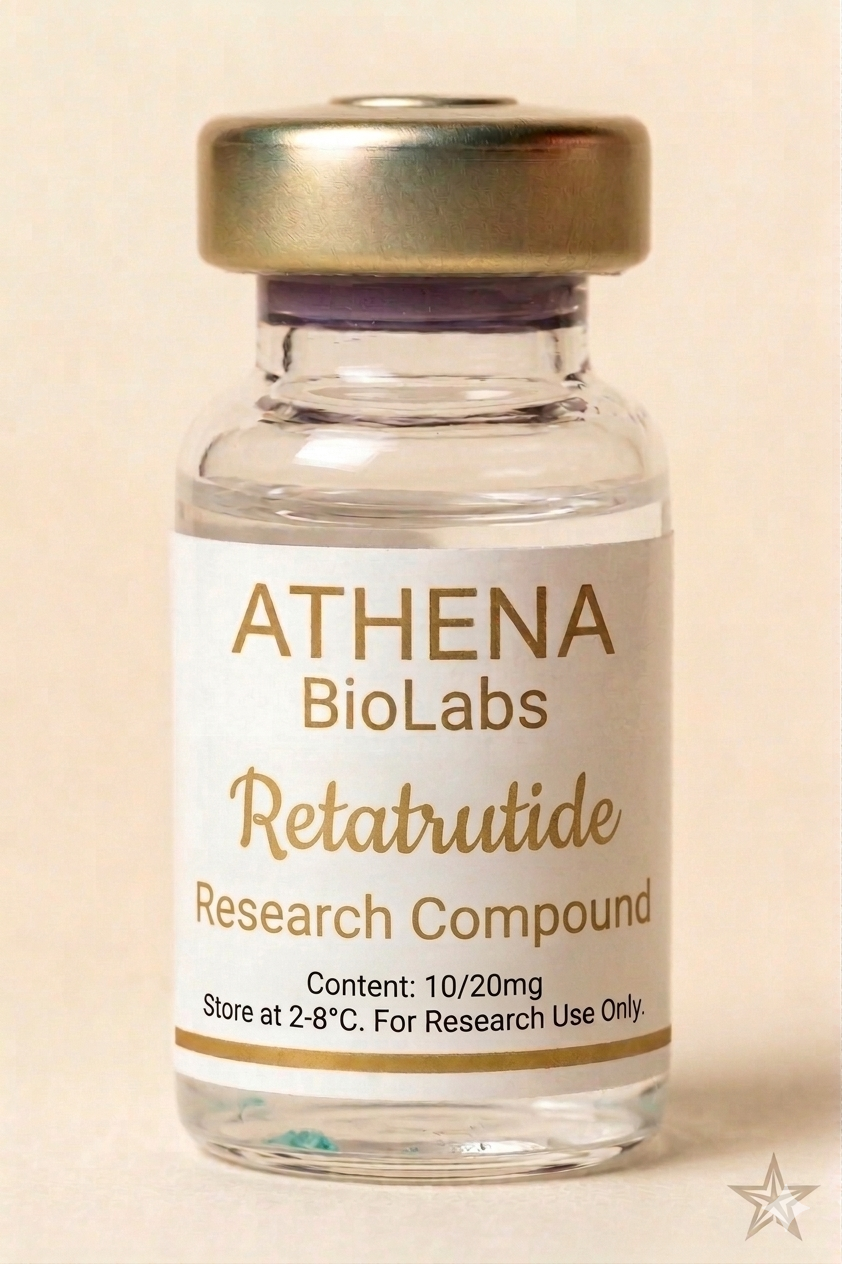
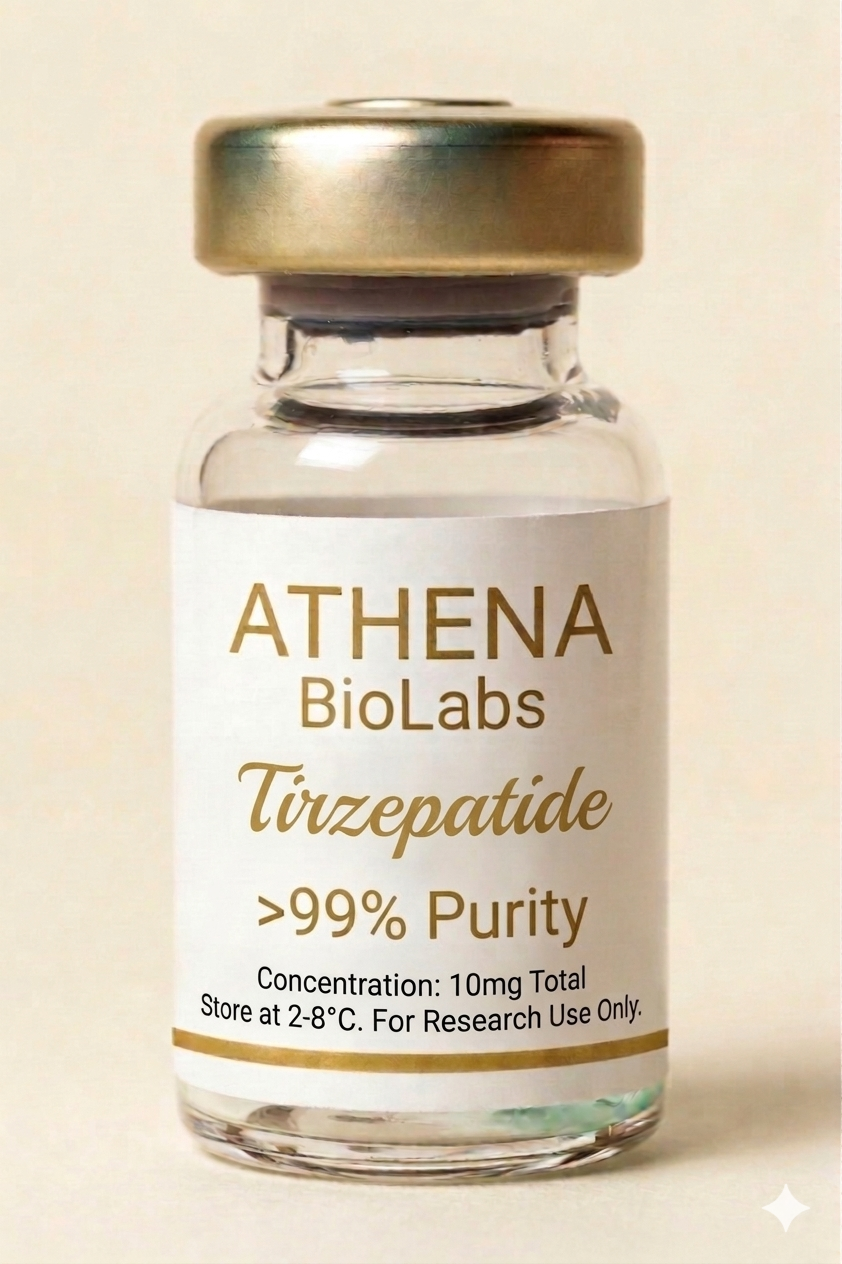
Retatrutide vs Tirzepatide: How the Two Compounds Differ
A triple-receptor agonist versus a dual-receptor agonist — what the published research literature actually shows.
Updated 8 July 2026 · 6 min read
- Tirzepatide is a dual agonist acting on GIP and GLP-1 receptors; retatrutide is a triple agonist adding glucagon-receptor activity.
- Retatrutide’s added glucagon-receptor agonism is associated in the research literature with increased energy expenditure, distinguishing it mechanistically from tirzepatide.
- In the phase 2 retatrutide obesity trial (Jastreboff et al., NEJM 2023), mean body-weight reduction at 48 weeks reached approximately 24% at the highest dose studied.
- Tirzepatide’s SURMOUNT-1 phase 3 trial (Jastreboff et al., NEJM 2022) reported mean weight reduction of about 20.9% at the highest dose over 72 weeks.
- Tirzepatide molecular weight is ~4,813 g/mol; both are peptides supplied lyophilised for reconstitution in research settings.
- Both compounds are supplied strictly for in-vitro laboratory research and are not approved for human or animal use.
The core difference: dual vs triple agonism
Tirzepatide and retatrutide belong to the same broad class of incretin-based research peptides, but they differ in how many receptor pathways they engage. Tirzepatide is a dual agonist: it activates the glucose-dependent insulinotropic polypeptide (GIP) receptor and the glucagon-like peptide-1 (GLP-1) receptor. Retatrutide adds a third pathway — the glucagon receptor — making it a triple agonist across GIP, GLP-1 and glucagon.
That third receptor is the headline distinction studied in the literature. Glucagon-receptor agonism is associated with increased energy expenditure and hepatic lipid effects, which is the mechanistic rationale most often cited for retatrutide’s pronounced weight-related outcomes in trials.
What the published trials reported
In the phase 2 randomized trial of retatrutide for obesity (Jastreboff et al., New England Journal of Medicine, 2023), the highest dose studied produced a mean body-weight reduction of roughly 24% at 48 weeks — among the largest reductions reported for any single agent in this class at the time of publication.
Tirzepatide’s pivotal SURMOUNT-1 trial (Jastreboff et al., New England Journal of Medicine, 2022) reported mean reductions of approximately 15%, 19.5% and 20.9% across ascending doses over 72 weeks. Direct head-to-head human trials between the two compounds were still limited at the time of writing, so cross-trial comparisons should be read with the usual caveats about differing durations and populations.
Handling and research considerations
Both are peptides supplied as lyophilised powder and reconstituted with bacteriostatic water for research. Both are sensitive to heat and are best stored lyophilised at −20°C, with reconstituted material kept refrigerated at 2–8°C. Because retatrutide in particular degrades when shipped or stored warm, cold-chain handling and a batch-specific Certificate of Analysis matter for reproducibility.
When sourcing either compound for research in India, the practical quality checks are identical: a batch-specific HPLC purity trace, mass-spectrometry confirmation of molecular weight, and an independent lab certificate you can verify on the lab’s own website.
Frequently asked questions
Is retatrutide stronger than tirzepatide?
In published trials, retatrutide’s highest studied dose produced a larger mean body-weight reduction (~24% at 48 weeks) than tirzepatide’s highest dose in SURMOUNT-1 (~20.9% at 72 weeks). The two have not been extensively compared head-to-head, and both are for research use only.
What is the main mechanistic difference?
Tirzepatide activates two receptors (GIP and GLP-1). Retatrutide activates three (GIP, GLP-1 and glucagon). The added glucagon-receptor activity is the defining difference and is linked in the literature to increased energy expenditure.
Can you buy retatrutide and tirzepatide for research in India?
Yes. Both are available from AthenaBioLabs as lyophilised research vials with a third-party Janoshik Certificate of Analysis and cold-chain delivery across India. Both are strictly for in-vitro laboratory research.